Project
Simple Latte
2018
On this page Overview
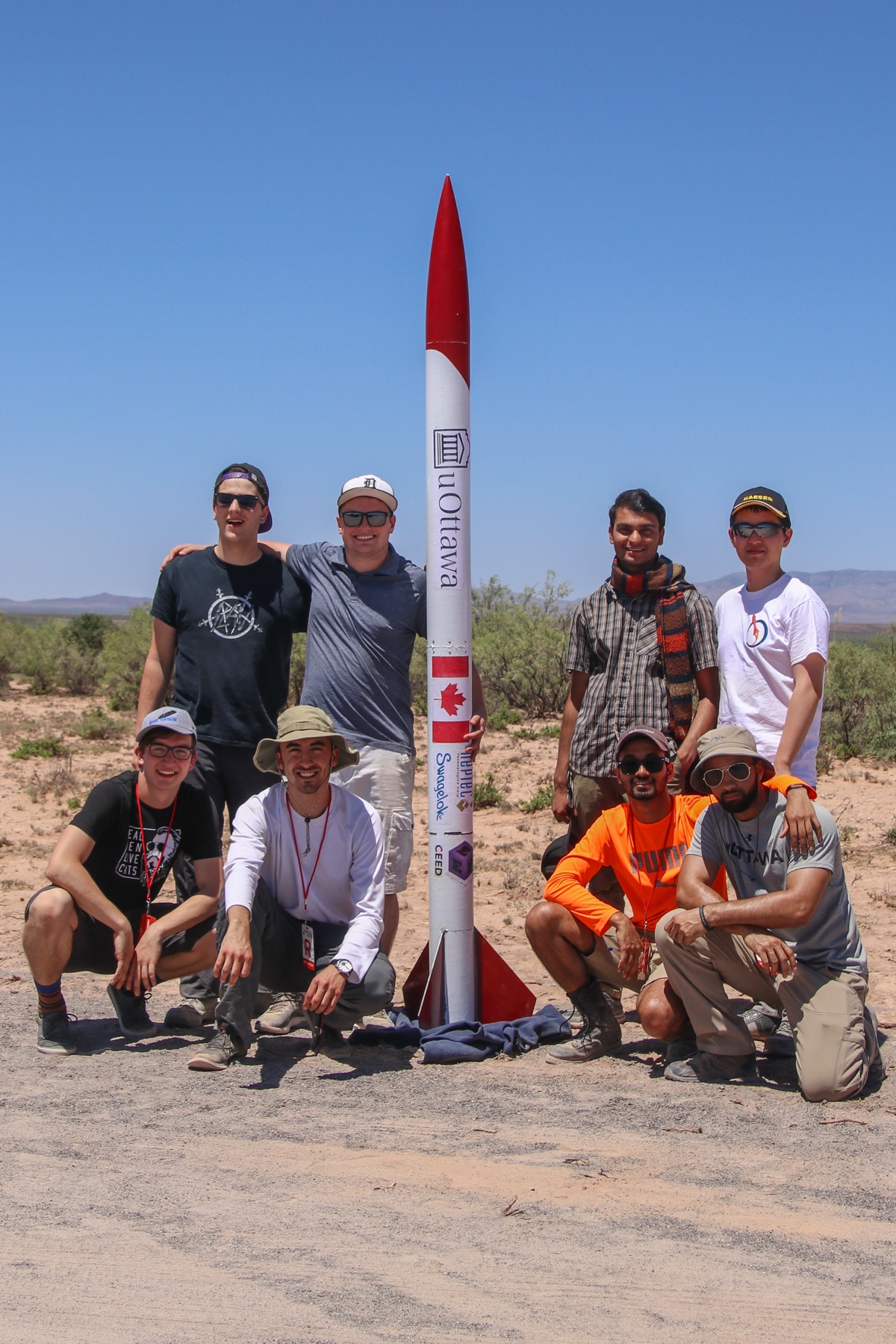
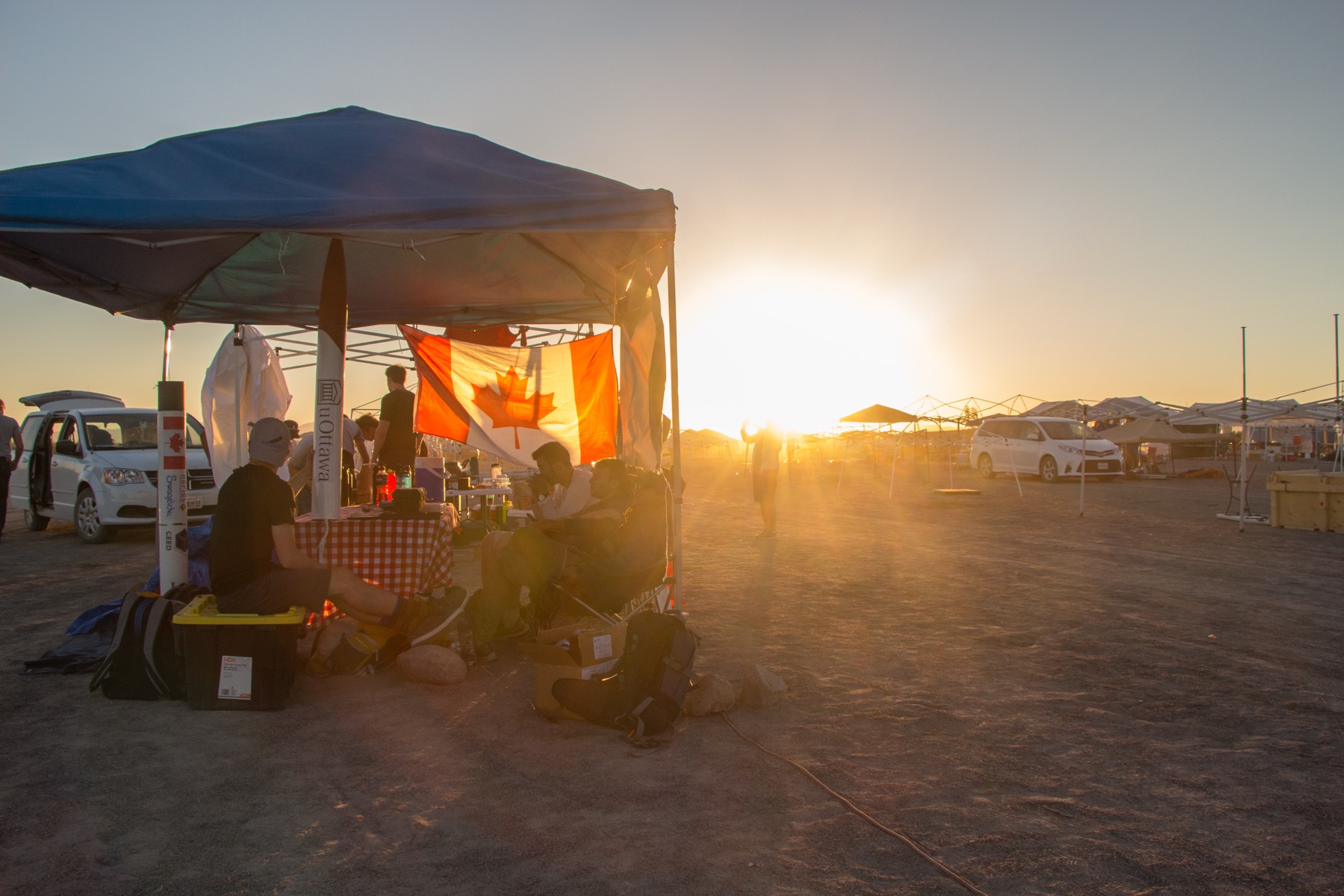
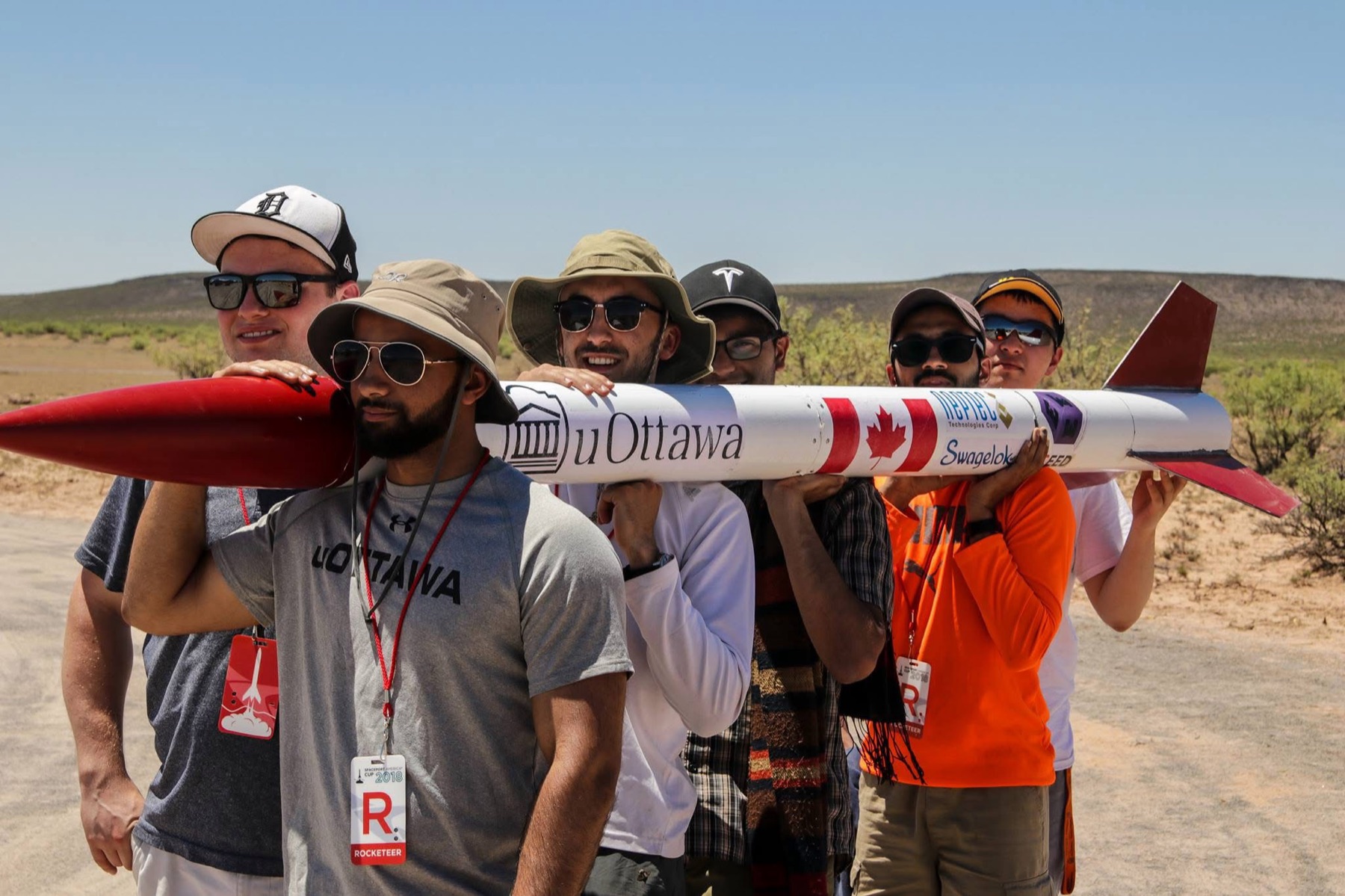
Simple Latte was uORocketry’s first rocket. After two years of development on the hybrid engine, the team decided to pivot towards a competitive goal, the Spaceport America Cup 2018 Intercollegiate Rocket Engineering Competition.
At Spaceport America Cup 2018, Simple Latte came in ballistic and almost all of the rocket was lost in the New Mexico desert. Another team recovered our nose cone, which remained with the team for testing. Simple Latte will forever be in our memory.
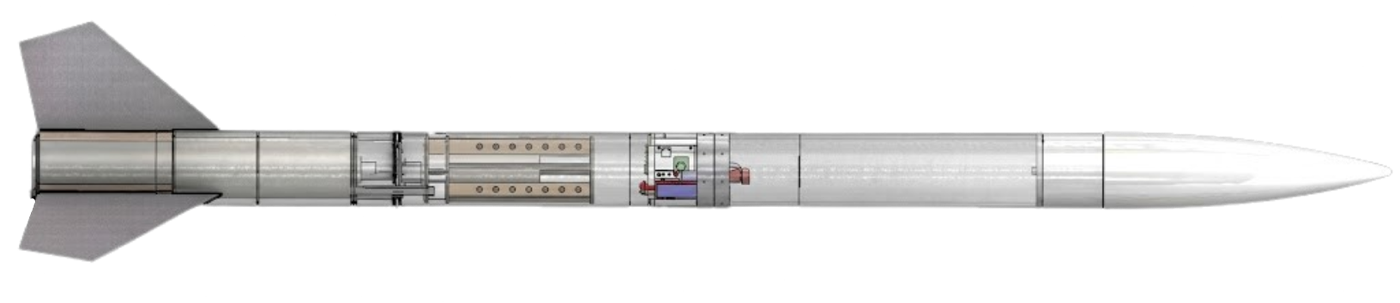
System architecture

- Nose cone
-
- COTS PNC-5.38 inch, LONG Model 20123
- Body tube
-
- COTS 98 mm LOC MMT Blue Tubes 2.0
- Fins
-
- Carbon-6061-aluminum sandwich composite
- Swept-back freeform fin
- Joining recovery bulkhead
-
- Aerospace-grade aluminum
- Couples the upper and lower body tubes
- Holds the parachute shroud lines
- Houses the parachute ejection system
- Airbrakes
-
- Plate aluminum and plywood
- Deploy after fuel expansion
- Adjust velocity to reach the target altitude
- Recovery
-
- Reefed parachute
- COTS CD3 Adventurer Kit CO2 ejection system
- Avionics
-
- SRAD Raspberry Pi running Raspbian
- 9-degree-of-freedom IMU
- Barometric altimeter
- GPS module
- COTS RRC3+ dual-deployment altimeter
- Payload
-
- Simulated payload
- 6.35 in steel stock
Flight specifications
- Propulsion
-
- COTS Cesaroni M2505 solid motor
- Target apogee
-
- 3,048 m (10,000 ft)
- Predicted apogee
-
- 3,120 m (10,236 ft)
- Maximum velocity
-
- Approximately Mach 1.0
- Maximum acceleration
-
- 140 m/s² at 1.25 s after ignition
- Dimensions
-
- Height 274 cm
- Diameter 14 cm
- Center of gravity
-
- Full 190.8 cm from the nose tip
- Empty 180.8 cm from the nose tip
- Center of pressure
-
- Minimum 211.5 cm from the nose tip
- Maximum 277.5 cm from the nose tip
- Mass
-
- Full 20.6 kg
- Empty 13.0 kg
- Stability margin
-
- 1.55 cal at launch-rod clearance
- 2.22 cal at apogee
- Launch configuration
-
- 15 ft rail
- Rail departure velocity above 30.5 m/s
- Nominal rail angle 6°
- Maximum wind velocity 10 km/h
- Motor performance
-
- Average thrust 2,491 N
- Peak thrust 2,952.6 N
- Initial thrust 2,600 N
- Total impulse 7,450 Ns
- Burn time 3 s
- Parachute descent speed
-
- Reefed 27 m/s
- De-reefed 9 m/s
Project gallery