Project
Apogee-Gee
2024-2025

On this page Overview
2024 campaign
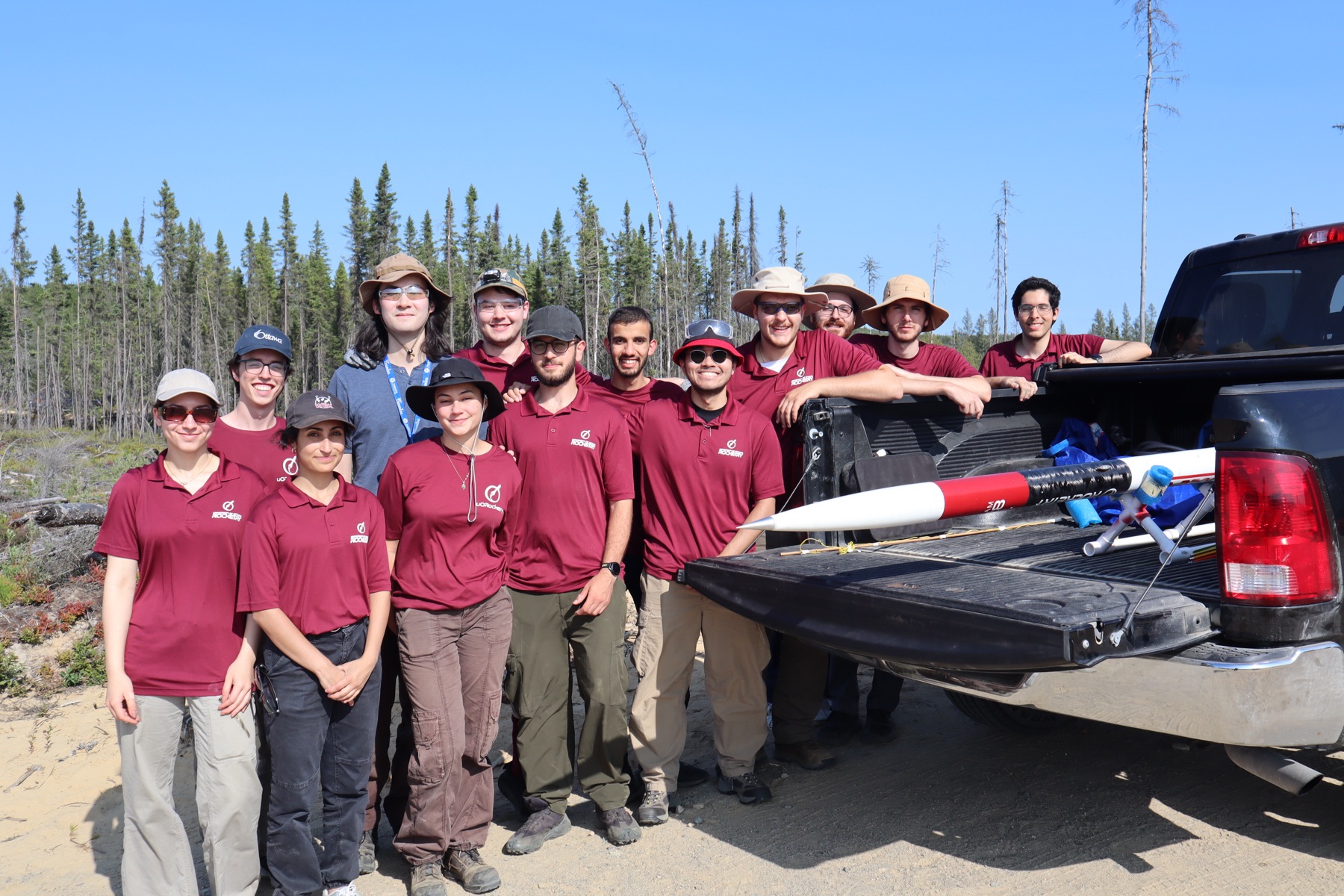
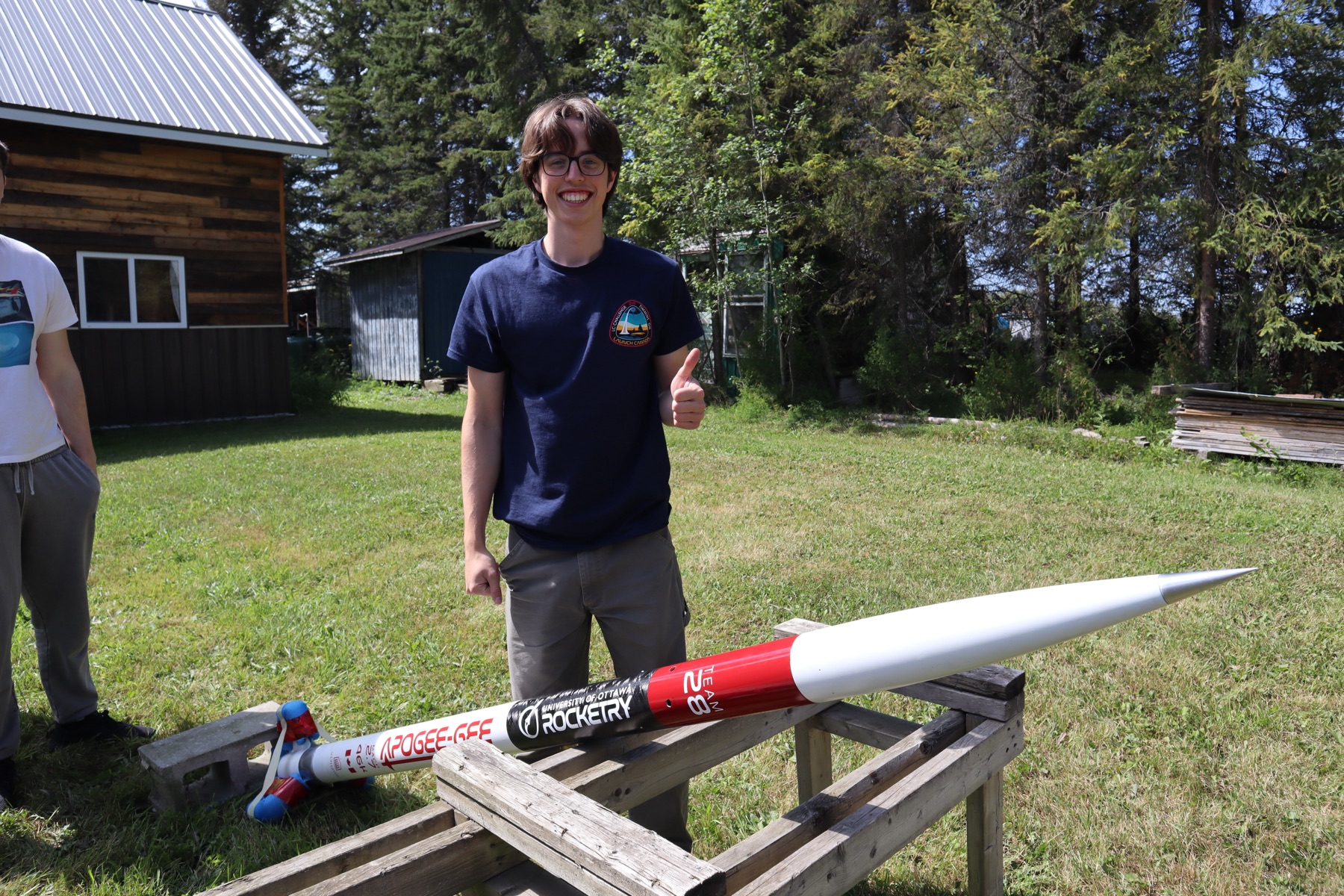
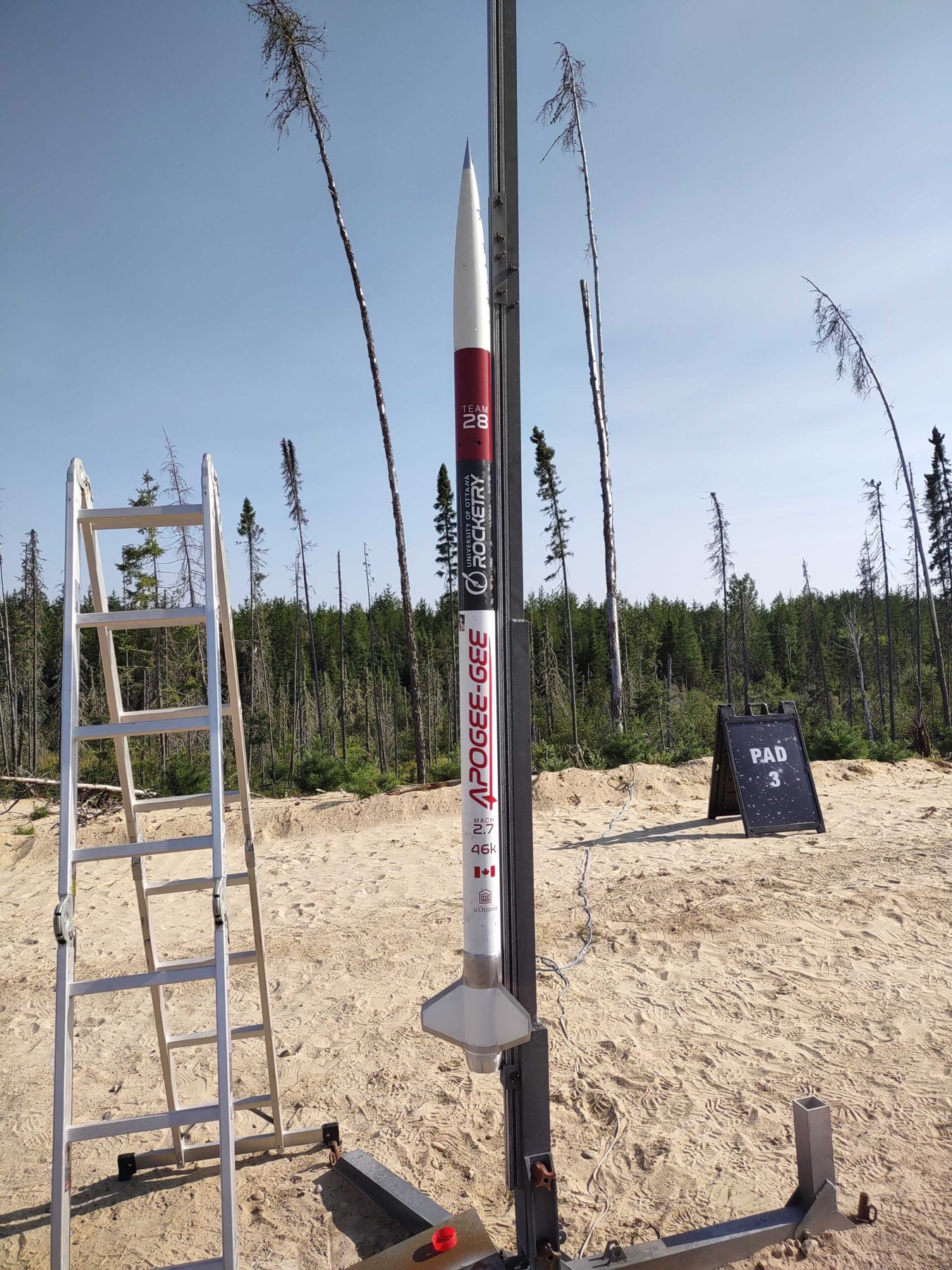
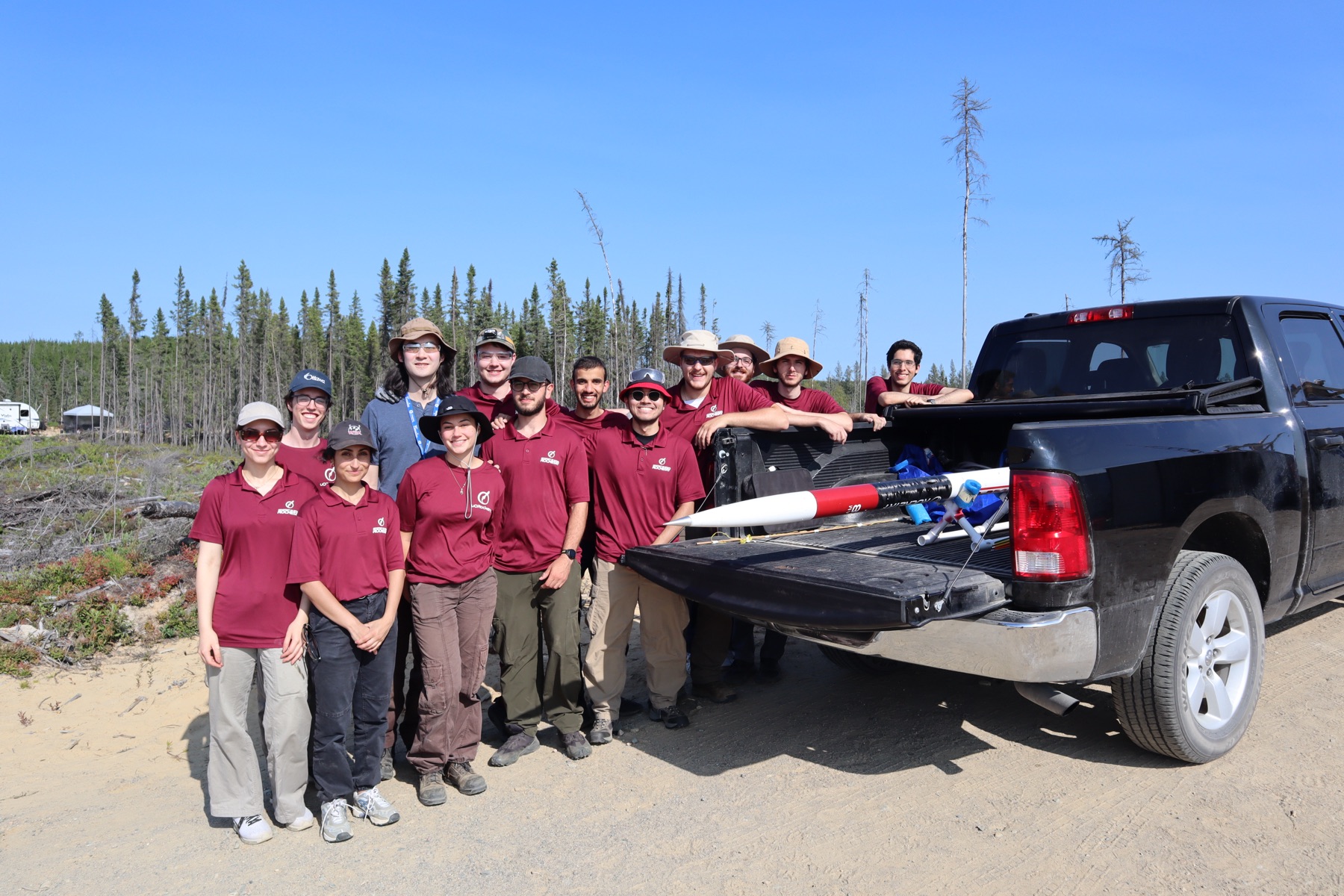
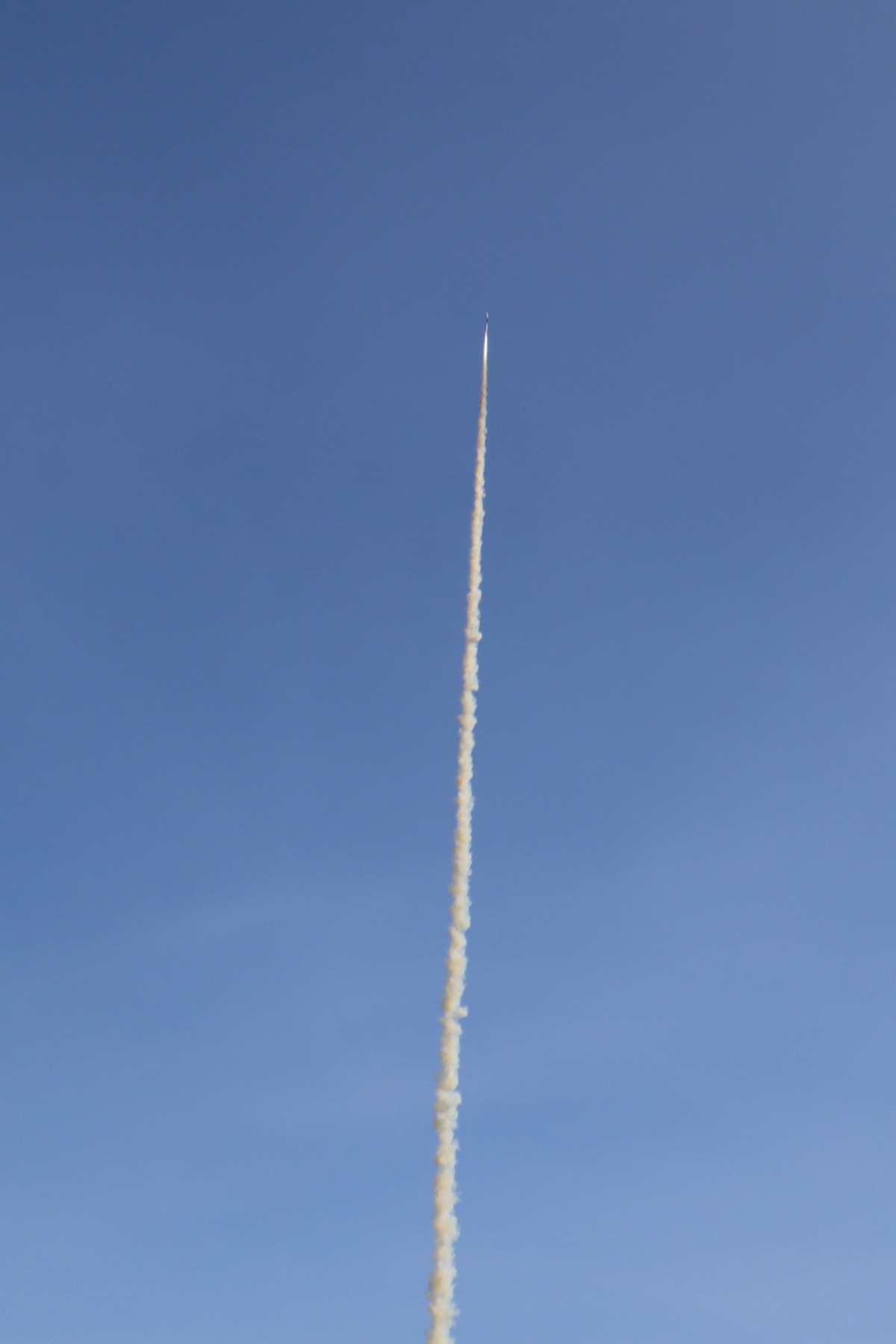
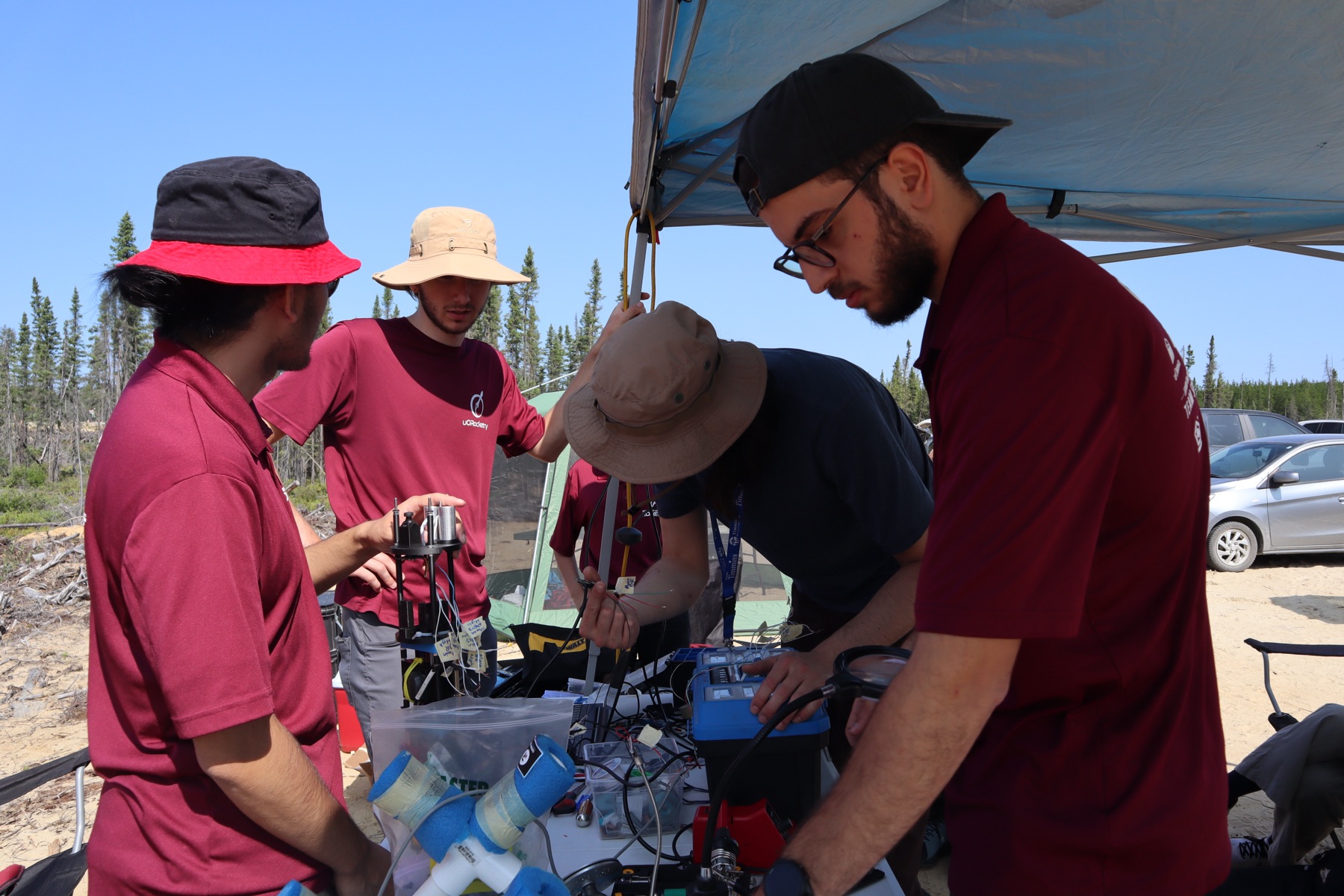
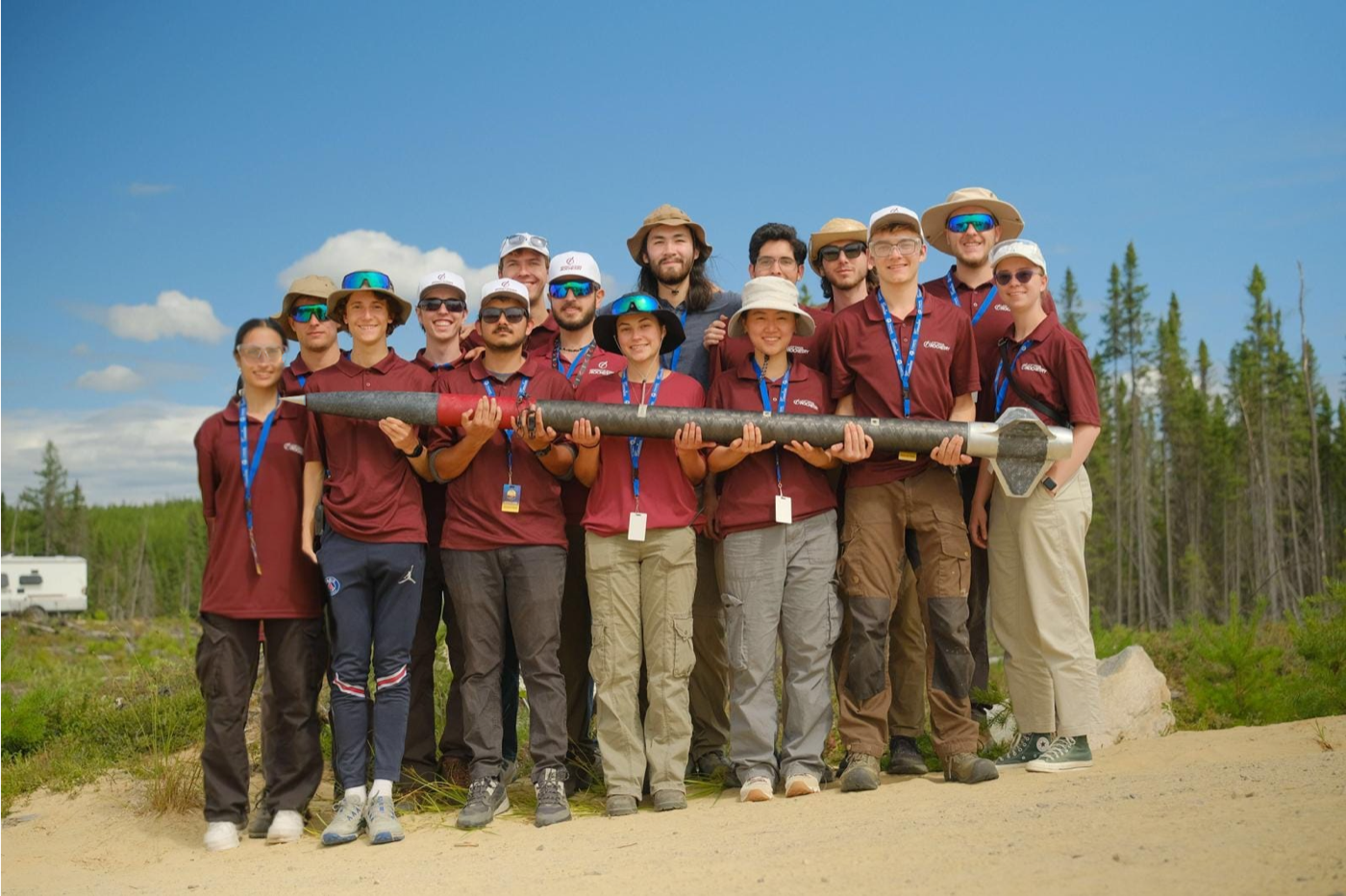
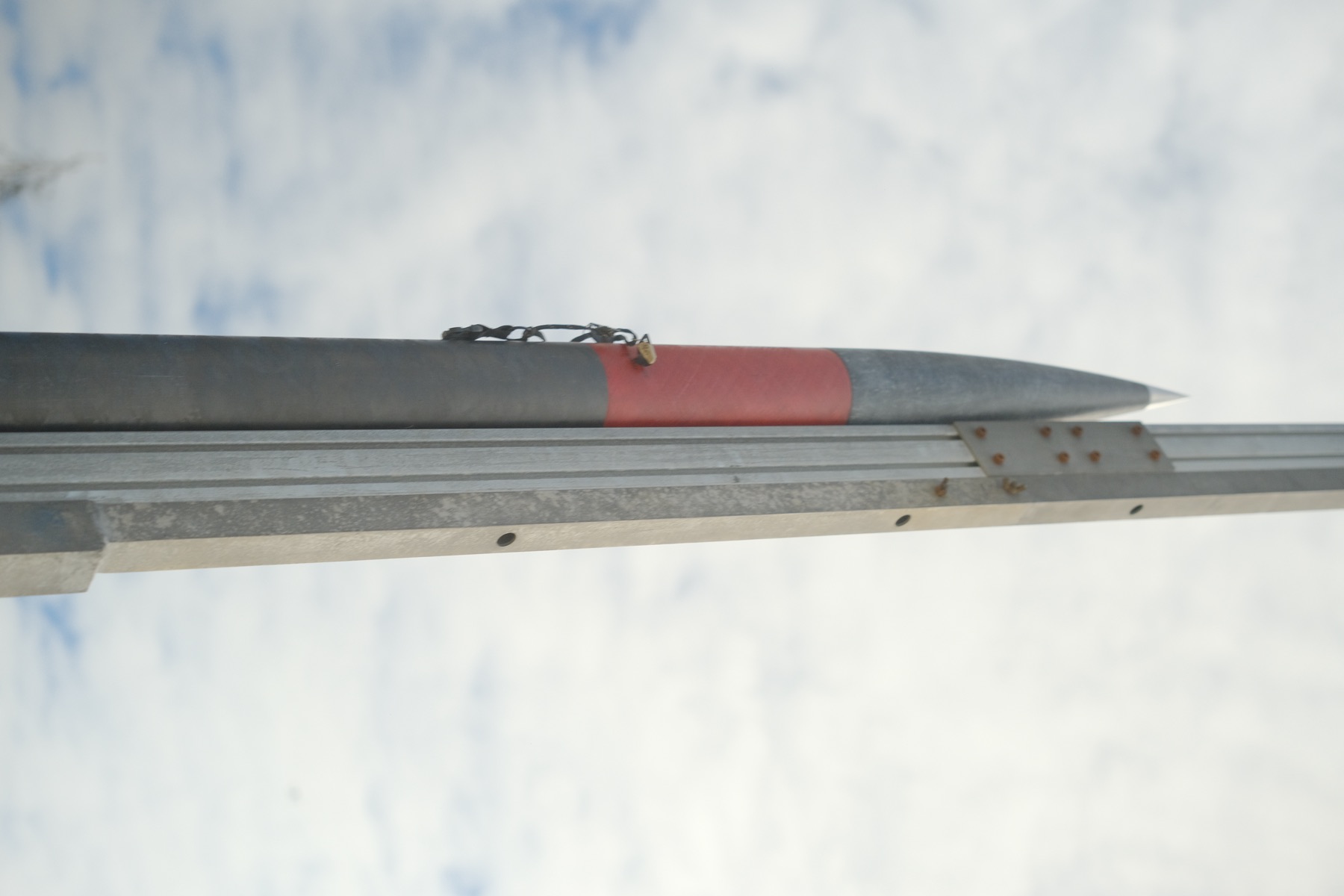
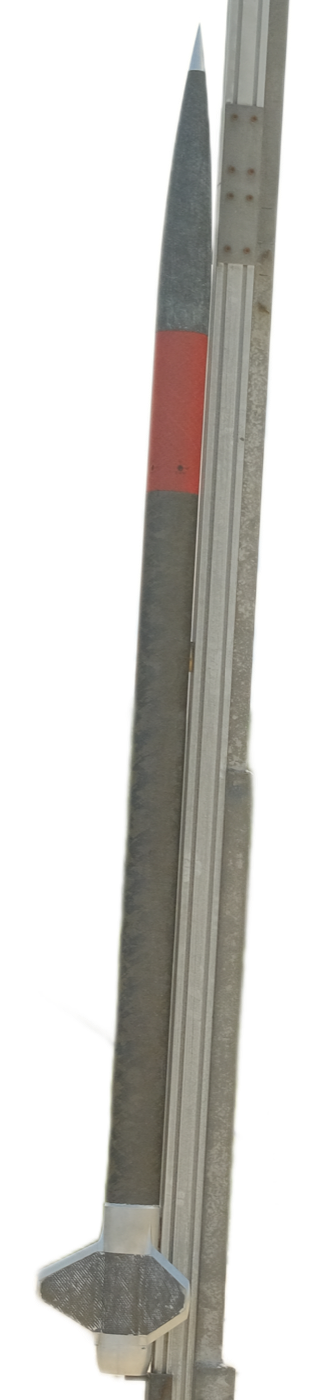
We returned to Timmins at Launch Canada 2024 with our minimum diameter rocket, Apogee-Gee, aiming towards the O-class motor altitude record. Learning from our experience with Gee-Force One, the team has decided to significantly redesign the arming systems and deployment charge connectors. The avionics section was also redesigned upon HYDRA V2, with quality-of-life upgrades and a radical size reduction. This was also our first year using our SRAD Antenna Tracker, which was in development and manually operated.
At the launch, HYDRA faced multiple difficulties and was unable to be incorporated to Apogee-Gee before launch. One of our COTS flight computer, Aim Xtra, was also damaged during testing, leading to a switch to a Blue Raven Altimeter and incorporating it into our avionics system. In flight, Apogee-Gee was also affected by the exterior paint and resulted in a much lower apogee. Overall, Apogee-Gee had a nominal flight in 2024 and achieved 9th place in the Basic Launch Category.
2024 system architecture

- Nose cone
-
- COTS filament-wound G12 fiberglass
- 6:1 Von Kármán profile
- 6061-T6 aluminum external tip
- Tubes
-
- COTS filament-wound G12 fiberglass
- Avionics bay
-
- M4 x 0.7 Class 8.8 threaded rods
- 3D-printed ABS mount
- Recovery
-
- 6061-T6 aluminum bulkheads with ribs
- CO2 dual deployment for SRAD drogue and main parachutes
- Motor mount
-
- 6061-T6 aluminum bulkhead with ribs
- Launch lugs
-
- Bearing bronze
- Fins
-
- Three trapezoidal carbon-fiber fins
- Tip-to-tip layup with prefabricated panels over a honeycomb core
- 6061-T6 aluminum tips
- Tail cone
-
- 6061-T6 aluminum attached to the fin rings
- Avionics (HYDRA V3)
-
- Significantly reduced in size to fit a minimum-diameter rocket
- Link board for ground-station data transmission
- Power board for clean and stable power
- Navigation board for data acquisition
- Recovery board with 5-pin connectors and COTS Aim Xtra and RRC3+ redundancy
- Independent Featherweight GPS tracker
- Shock-rated key switches
- Ground station (RGS)
-
- PostgreSQL primary database with Hasura
- Web GUI with altitude indicator, CesiumJS 3D globe, real-time sensor graphs, and internal monitoring tools
2024 designed system characteristics

- Propulsion
-
- COTS Cesaroni O3400 Pro98-6GXL Imax solid motor
- Target apogee
-
- 15,240 m (50,000 ft)
- Predicted apogee
-
- 15,530 m (50,950 ft)
- Maximum velocity
-
- Mach 2.7
- Maximum acceleration
-
- 221 m/s²
- Dimensions
-
- Height 2.5 m
- Diameter 98 mm (4 in)
- Center of gravity
-
- Full 1.5 m from the nose tip
- Empty 1.3 m from the nose tip
- Center of pressure
-
- Minimum 1.8 m from the nose tip
- Maximum 2.1 m from the nose tip
- Mass
-
- Dry 15 kg
- Wet 26 kg
- Stability margin
-
- Minimum 2.8 cal
- Maximum 7 cal
- Launch configuration
-
- 5.64 m rail
- Rail departure velocity 45.5 m/s
- Nominal rail angle 84°
- Maximum wind velocity 30 km/h
- Motor performance
-
- Average thrust 3,416.7 N
- Peak thrust 4,750.3 N
- Initial thrust 4,319.2 N
- Total impulse 21,062.2 Ns
- Burn time 6.2 s
- Specific impulse 197 s
- Fin geometry
-
- Three fins mounted at the lowest point on the fin tube
- Root chord 200 mm
- Span 119 mm
- Tip chord 70 mm
- Sweep distance 65 mm
- Parachute descent speed
-
- Drogue 30 m/s at apogee +3 s
- Main 6 m/s at 450 m AGL
- Peak deployment force
-
- Drogue 277 N at apogee +3 s
- Main 1,250 N at 0.2 s after opening at 450 m AGL
2024 post-flight assessment
- Apogee
-
- Approximately 11,278 m (37,000 ft)
- Maximum velocity
-
- Mach 2.7
- Structure
-
- Nose cone undamaged
- Body tubes, couplers, bulkheads, and launch lugs intact
- All shear pins cleanly sheared
- Motor casing intact
- Fins intact with friction and heat damage to paint
- Paint and vinyl stickers damaged by aerodynamic heating
2025 campaign
The story of Apogee-Gee was not over just yet. We brought it back with us to Launch Canada 2025! While most of the airframe and recovery systems remain the same, we have reduced the size of the main parachute, stripped the rocket of any decorative layer and modified the avionics bay to fit our new flight computer, PHOENIX.
Despite our efforts to reattempt at the M-class motor altitude record, Apogee-Gee suffered from a series of obstacles, from issues with our batteries, to defective motor adhesive. Ultimately, Apogee-Gee went up into the clouds and experienced a rapid unscheduled disassembly.
Even though the results were not ideal, we remained determined to recover as much as possible. Thanks to our telemetry data and visual sightings from fellow competitors, volunteers and spectators, we were able to recover the nose cone, the avionics bay, a broken half of a fin and our torn drogue parachute. The second flight of Apogee-Gee was devastating to the team, but it was an important experience for us to improve our documentation and procedural skills to have as much control over the variables as we can. While Apogee-Gee lies in the forest of Timmins, its spirit as a minimum diameter rocket lives on as Perigee-Gee.
2025 system architecture changes
- Recovery
-
- Main parachute reduced from 2.0 m to 1.8 m
- Avionics (PHOENIX)
-
- COTS RRC3+ as primary and Blue Raven as secondary flight computer
- PHOENIX carried as a passenger
- Single flight-computer board based on HYDRA V3
- Independent Featherweight GPS tracker
- Audible Mario-themed system indicator
2025 designed system characteristics

- Propulsion
-
- COTS Cesaroni O3400 Pro98-6GXL Imax solid motor
- Target apogee
-
- 13,716 m (45,000 ft)
- Predicted apogee
-
- 13,947 m (45,758 ft)
- Maximum velocity
-
- Mach 2.5
- Maximum acceleration
-
- 207 m/s²
- Dimensions
-
- Height 2.5 m
- Diameter 98 mm (4 in)
- Center of gravity
-
- Full 1.6 m from the nose tip
- Empty 1.4 m from the nose tip
- Center of pressure
-
- Minimum 1.8 m from the nose tip
- Maximum 2.1 m from the nose tip
- Mass
-
- Dry 13.5 kg
- Wet 24 kg
- Stability margin
-
- Minimum 4.1 cal
- Maximum 7 cal
- Launch configuration
-
- 5.64 m rail
- Rail departure velocity 42.1 m/s
- Nominal rail angle 84°
- Maximum wind velocity 30 km/h
- Motor performance
-
- Average thrust 3,416.7 N
- Peak thrust 4,750.3 N
- Initial thrust 4,319.2 N
- Total impulse 21,062.2 Ns
- Burn time 6.2 s
- Specific impulse 197 s
- Fin geometry
-
- Three fins mounted at the lowest point on the fin tube
- Root chord 200 mm
- Span 119 mm
- Tip chord 70 mm
- Sweep distance 65 mm
- Root fillet radius 12 mm
- Average thickness 12.92 mm at the centerline
- Parachute descent speed
-
- Drogue 25 m/s at apogee +3 s
- Main 6.6 m/s at 450 m AGL
- Peak deployment force
-
- Drogue 204 N at apogee +3 s
- Main 837 N at 0.2 s after opening at 450 m AGL
2025 post-flight assessment
- Apogee
-
- Approximately 2,743 m (9,000 ft)
- Maximum velocity
-
- Mach 2.7
- Recovered components
-
- Nose cone with impact damage at the bottom
- Main bulkhead intact
- Broken half of a fin panel with honeycomb core and aluminum tip
- Avionics, with a broken mounting bracket and a loosened secondary power supply
- Torn drogue parachute
- CO2 deployment devices undamaged with canisters unpunctured
- Not recovered or damaged
-
- Body tubes and couplers had noticeable damage
- Body tubes, motor casing, launch lugs, and main parachute not recovered
- Fins debonded
- Tethers and risers severed or not recovered
- All shear pins cleanly sheared
Project gallery