Project
Perigee-Gee
2026
On this page Overview
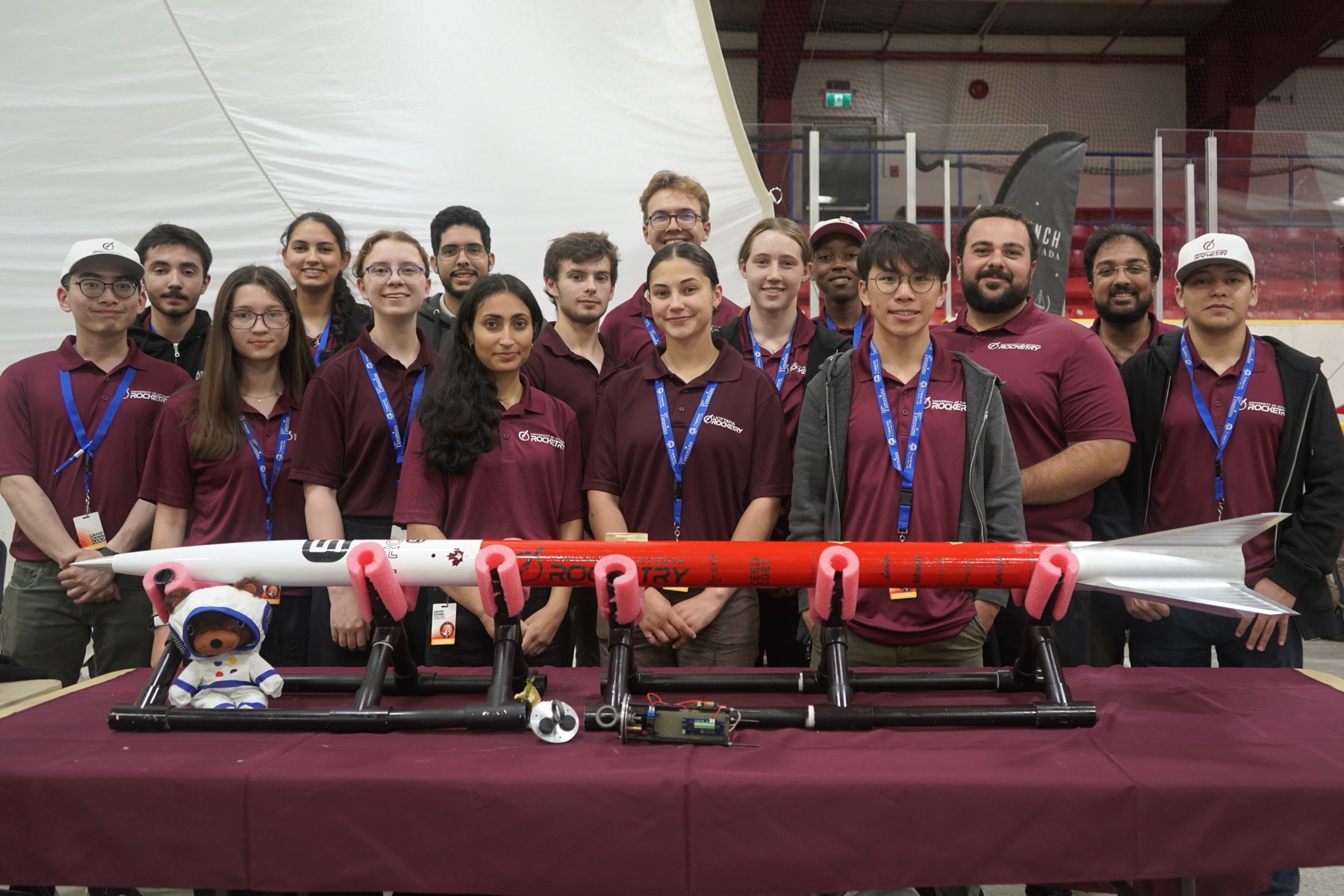
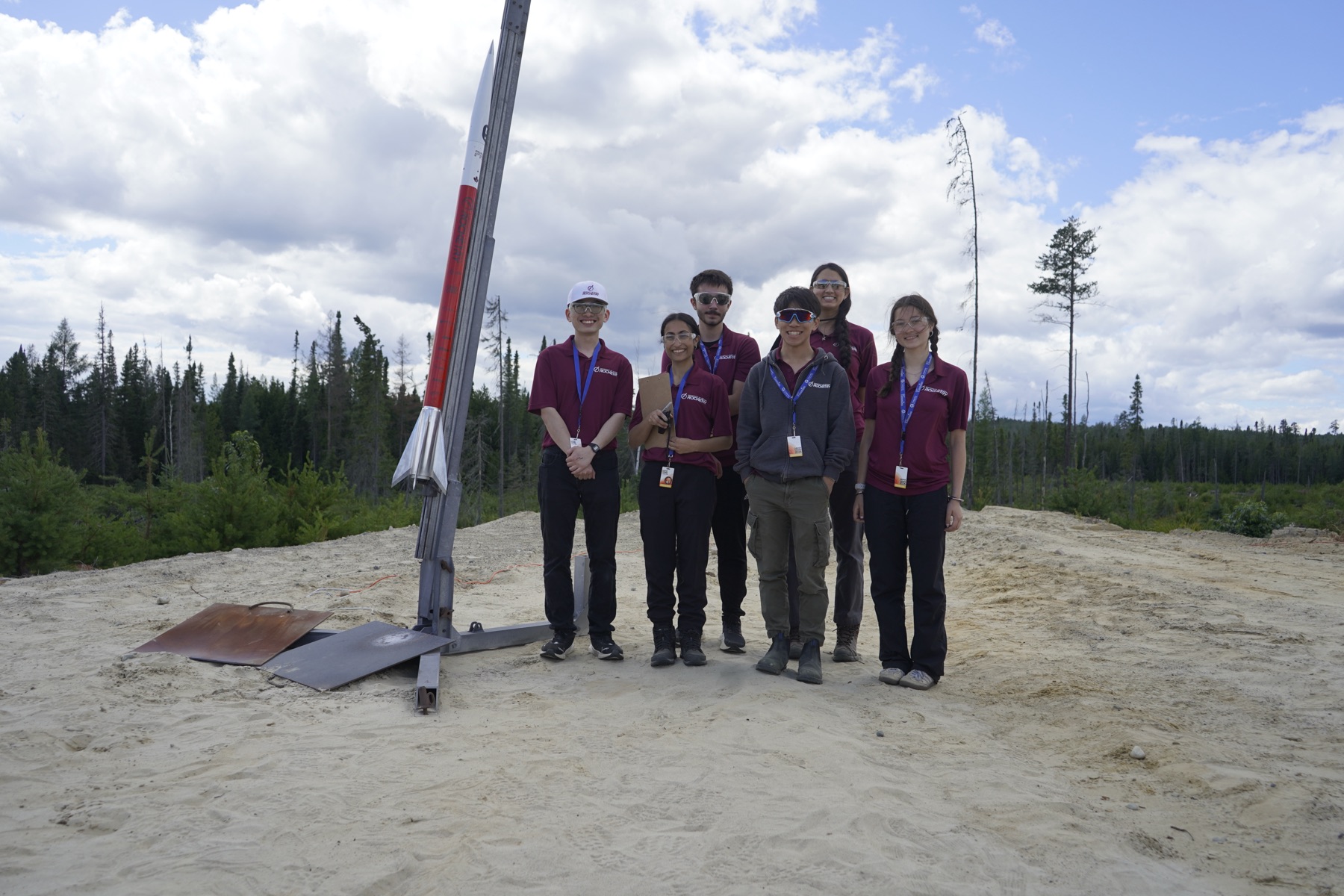
At Launch Canada 2026, we launched Perigee-Gee, an even smaller, slimmer minimum diameter rocket compared to Apogee-Gee. Instead of aiming for the O-class motor altitude record, we aimed for the M-class motor altitude record.
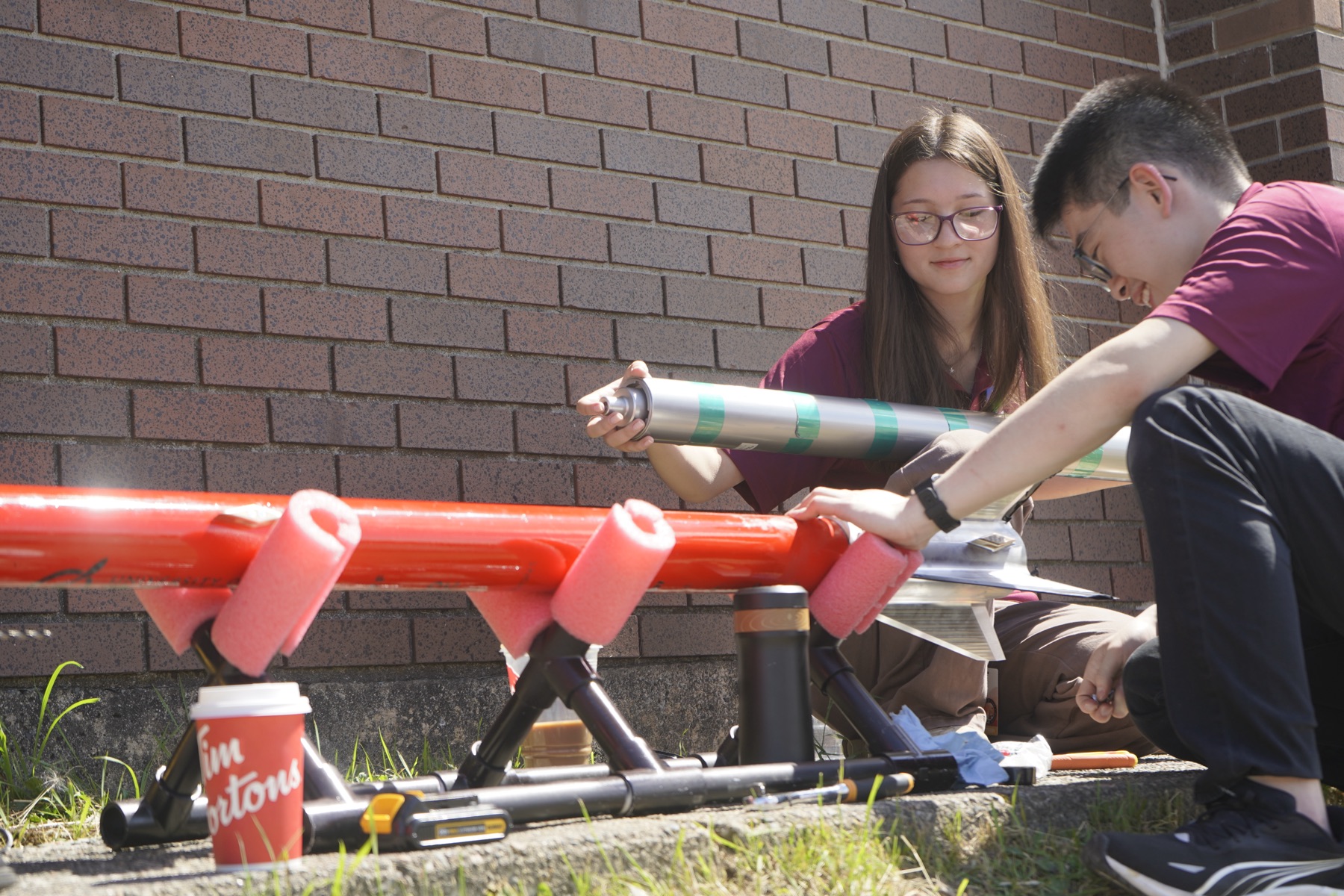
To make the rocket lighter and faster, the team removed several previous designs. Perigee-Gee does not use CO2 deployment devices or the SRAD PHOENIX flight computer. The fins were also switched from composites to aluminum to avoid the problems encountered by Apogee-Gee.
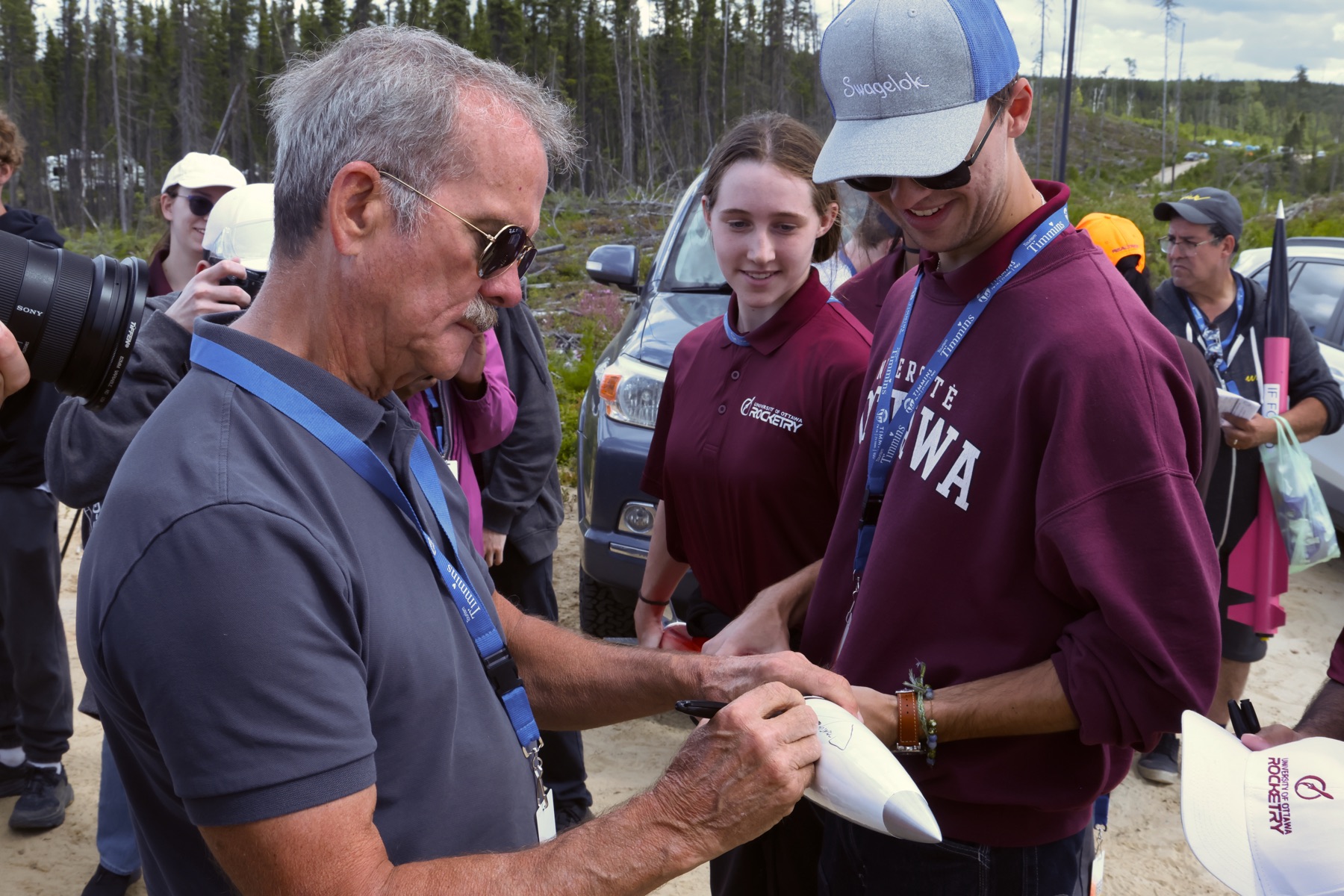
Perigee-Gee flew with Col. Chris Hadfield’s signature on the nose cone. Its apogee and maximum velocity closely matched the simulations, and the team completed a nominal recovery with the signature unscathed.
The flight set the Canadian Association of Rocketry altitude record for an M-class motor. Perigee-Gee earned first place in the Restricted Category and the Grand Launch Trophy, which recognizes professionalism and positive conduct throughout the final event.
System architecture

- Nose cone
-
- COTS fiberglass manufactured with VARTM
- 5:1 Von Kármán profile
- 6061-T6 aluminum external tip
- Tubes
-
- COTS filament-wound G12 fiberglass
- Avionics bay
-
- M3 threaded rods
- 3D-printed ABS mount
- Recovery
-
- 6061-T6 aluminum bulkheads with ribs
- Black-powder charge wells
- Motor mount
-
- 6061-T6 aluminum bulkhead with ribs
- Launch lugs
-
- Diamond-shaped bearing bronze
- Fins
-
- Four tapered 6061-T6 aluminum fins
- Bonded to the carbon-fiber body tube
- Avionics
-
- COTS RRC3+ primary flight computer
- COTS Blue Raven secondary altimeter
- COTS Featherweight GPS tracker
- Screw switches
Designed system characteristics

- Propulsion
-
- COTS Cesaroni M2245 Pro75-6GXL Imax solid motor
- Target apogee
-
- 10,668 m (35,000 ft)
- Predicted apogee
-
- 10,650 m (34,943 ft)
- Maximum velocity
-
- Mach 2.3
- Maximum acceleration
-
- 254 m/s²
- Dimensions
-
- Height 2.0 m
- Outer diameter 79.25 mm (3.12 in)
- Center of gravity
-
- Full 1.28 m from the nose tip
- Empty 1.15 m from the nose tip
- Center of pressure
-
- Minimum 1.5 m from the nose tip
- Maximum 1.6 m from the nose tip
- Mass
-
- Dry 7.44 kg
- Wet 12.51 kg
- Stability margin
-
- Minimum 3.43 cal
- Maximum 4.93 cal
- Launch configuration
-
- 5.64 m rail
- Rail departure velocity 42 m/s
- Nominal rail angle 84°
- Maximum wind velocity 30 km/h
- Motor performance
-
- Average thrust 2,326.4 N
- Peak thrust 3,357.0 N
- Initial thrust 2,778.0 N
- Total impulse 9,976.7 Ns
- Burn time 4.3 s
- Specific impulse 201 s
- Fin geometry
-
- Four fins
- Root chord 254 mm
- Span 76 mm
- Tip chord 52 mm
- Sweep distance 305 mm
- Root fillet radius 10 mm
- Thickness 6 mm at the centerline
- Parachute descent speed
-
- Drogue 25 m/s
- Main 7 m/s at 450 m AGL
- Peak deployment force
-
- Drogue 221 N at apogee +3 s
- Main 991 N at 0.2 s after opening at 450 m AGL
Post-flight assessment
- Apogee
-
- Approximately 10,607 m (34,801 ft)
- Maximum velocity
-
- Mach 2.3
- Structure
-
- Nose cone intact with Col. Hadfield's signature unscathed
- Body tubes, couplers, bulkheads, launch lugs, and motor casing intact
- All shear pins cleanly sheared
- Slight dent on one fin, but overall intact
- Avionics and main parachute intact
- Small holes in the drogue parachute
- Black-powder charge wells fully consumed
- Tethers and risers intact
Project gallery