Project
October Skies
2018-Present
On this page Overview
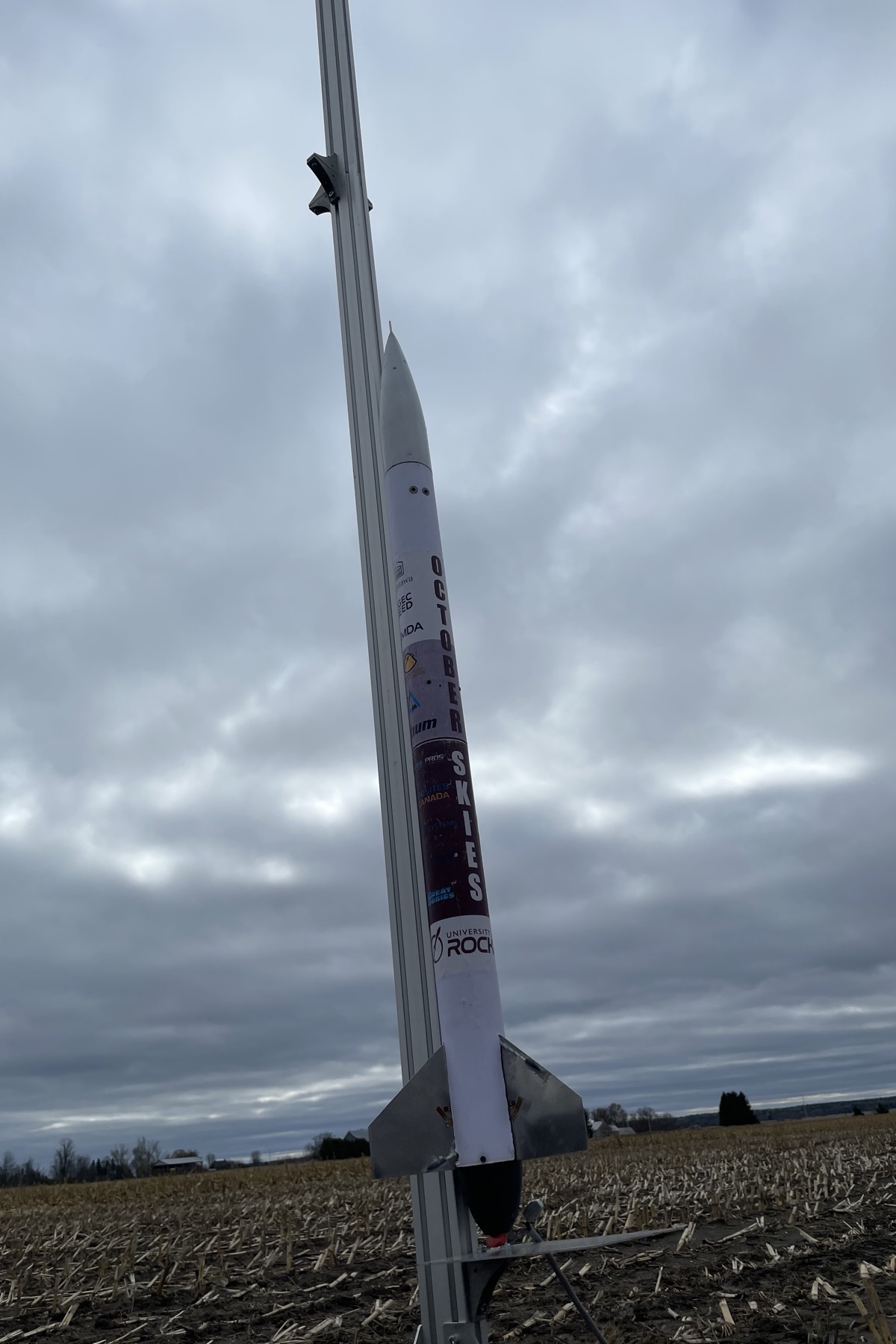
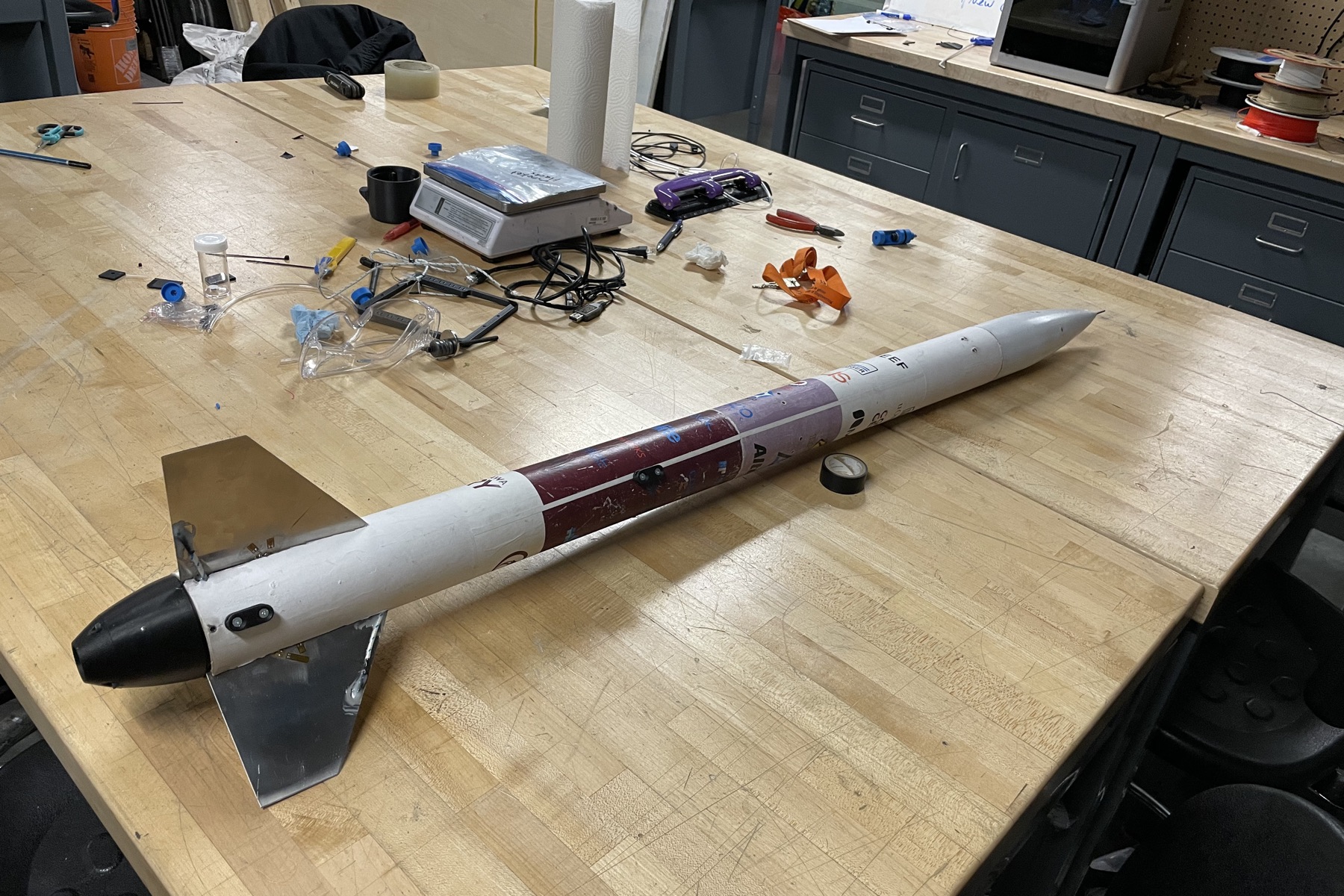
October Skies is a series of much smaller test rockets meant to test a specific aspect of the main competition rocket.
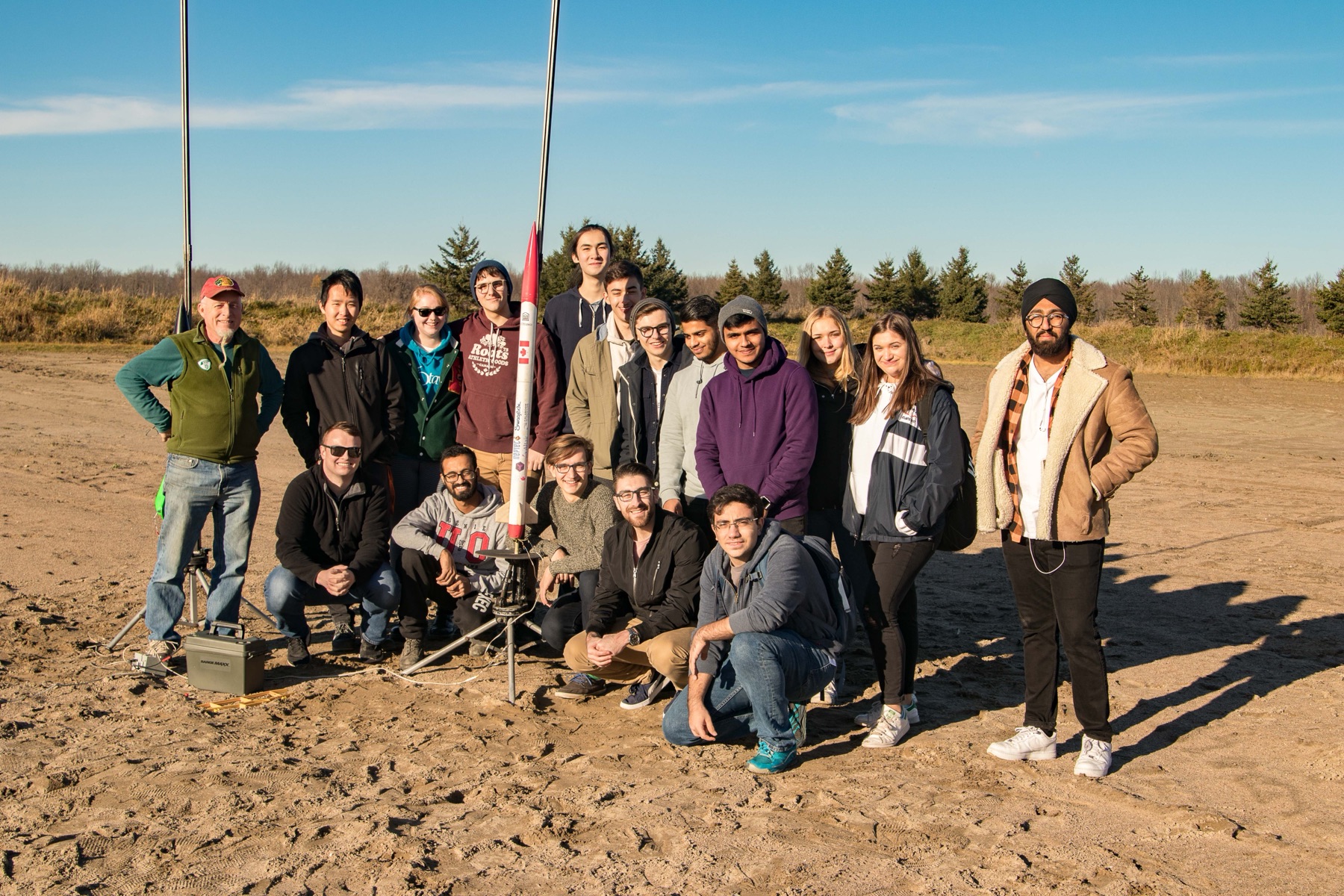
In 2018, we launched our first October Skies, named after the 1999 film. As we built more and more rockets, October Skies became almost an annual tradition to the team.
In 2019, another October Skies was built to test the new custom parachutes and exploding eyebolt, which were later incorporated in Jackalope. Like the 2018 October Skies, the 2019 one was also donated to one of our many sponsors.
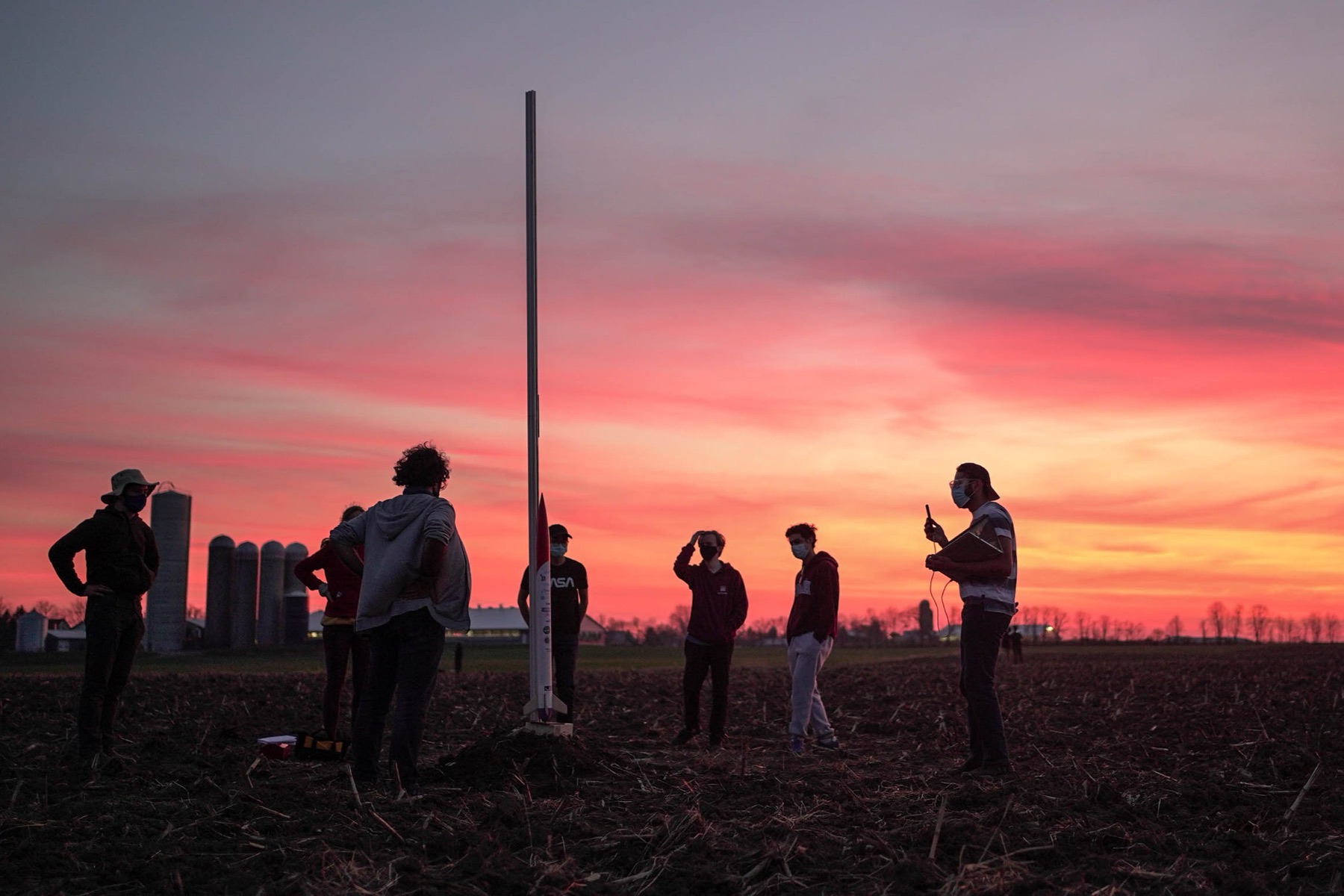
Despite the challenges during the pandemic, we remained dedicated to build October Skies in 2020. The 2020 October Skies tested the payload recovery quadcopter. This quadcopter has the ability to fold out and return the sample to the launch site, as the sample would only have been viable for 2 hours. Unfortunately, the drone was lost in a snowstorm during testing.
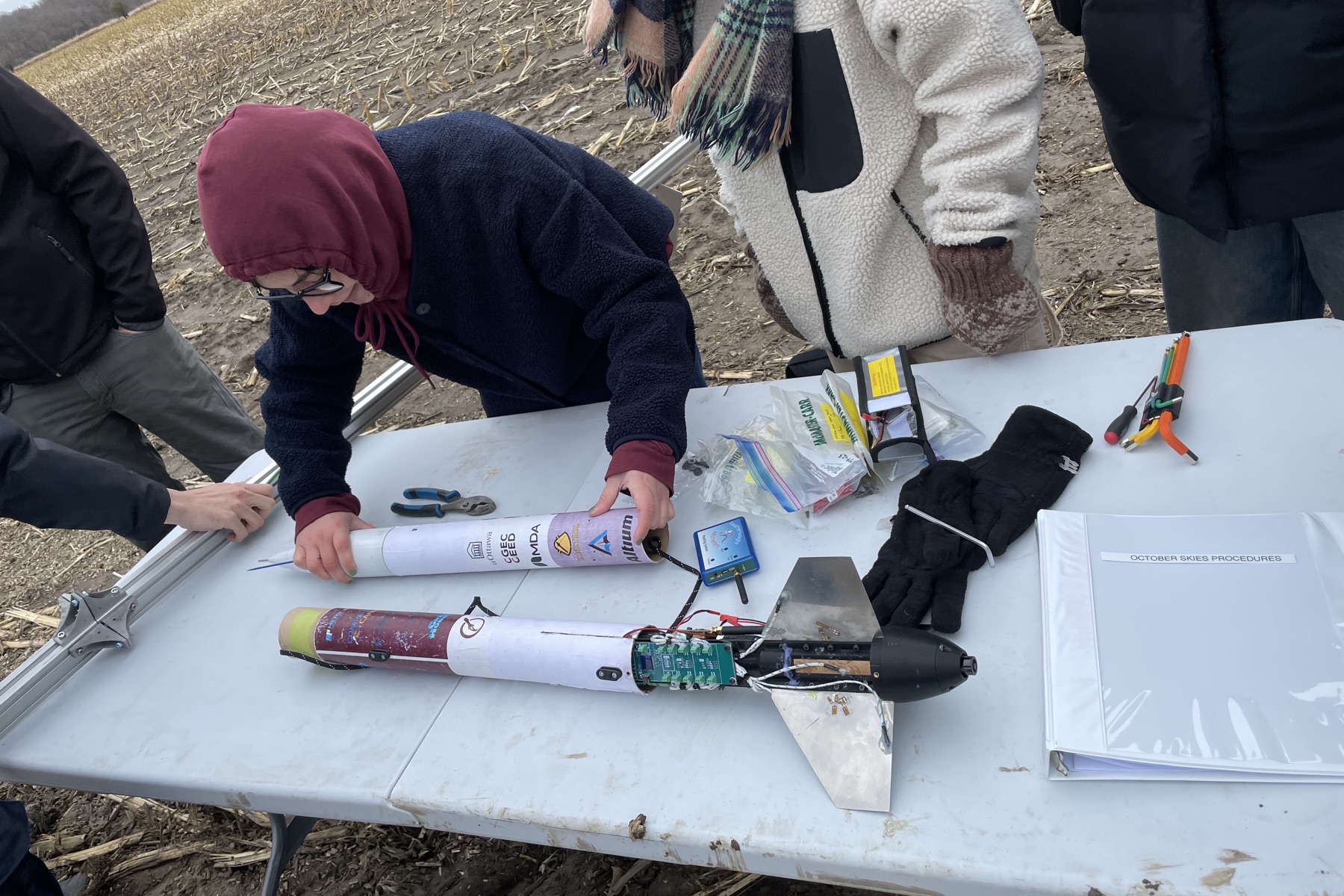
October Skies finally stepped into the competitive stage at LC25! Competing in the Technology Development Category, this October Skies is a small G-class motor rocket designed to house our ARGUS sensor suite.
After Apogee-Gee suffered from melted stickers that led to an increase in skin friction drag, we wanted to develop a better understanding at what rockets experience in flight, particularly pressure, temperature and strain data, and subsequently comparing these results to CFD analysis.
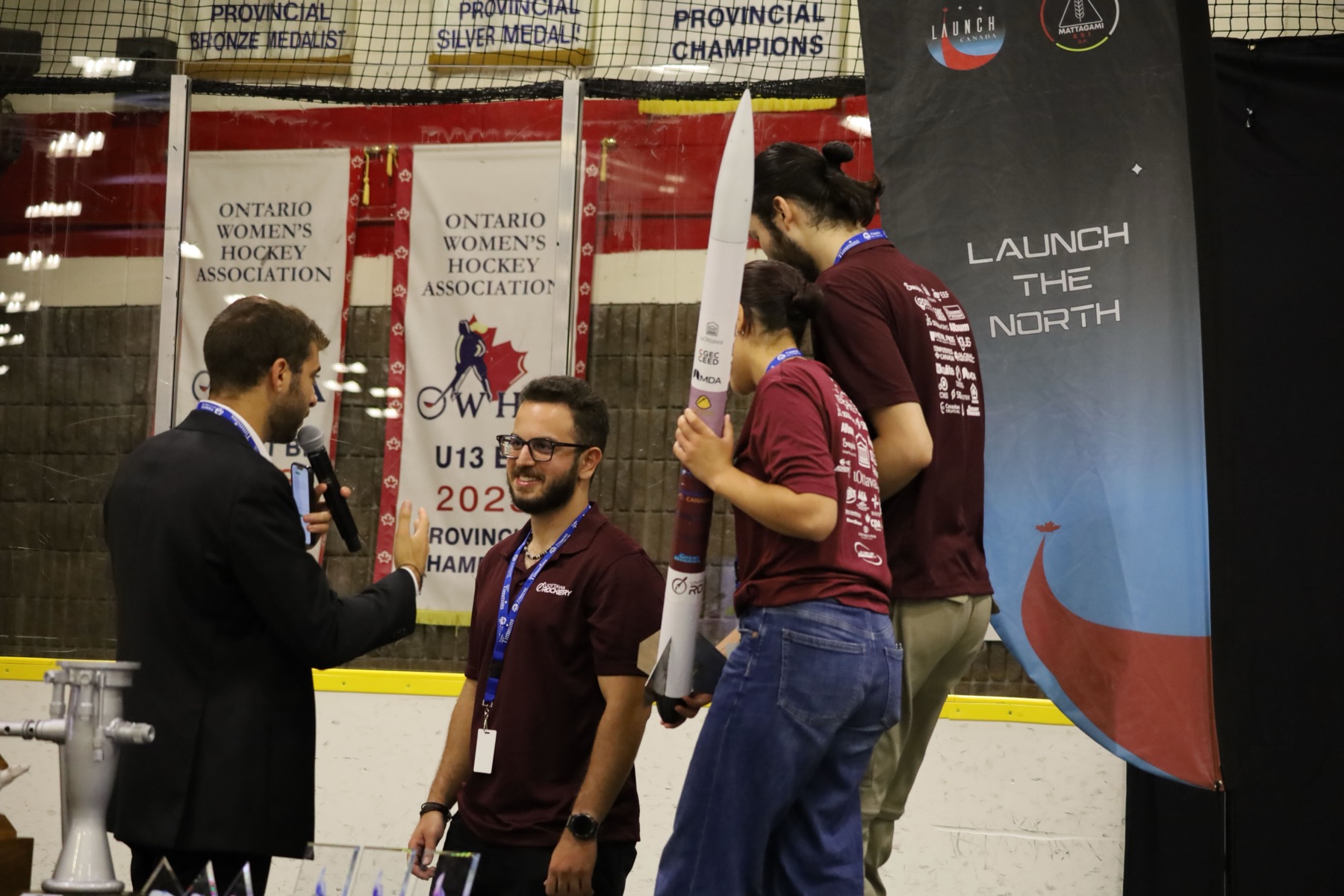
At Launch Canada 2025, the team presented October Skies and ARGUS at the conference. However, with the rapid unscheduled disassembly of Apogee-Gee, most of our personnel went into an extensive recovery operation and a launch in Timmins was not viable. For our demonstration, we were awarded 3rd place in the Technology Development Category, our team’s first podium finish at Launch Canada!
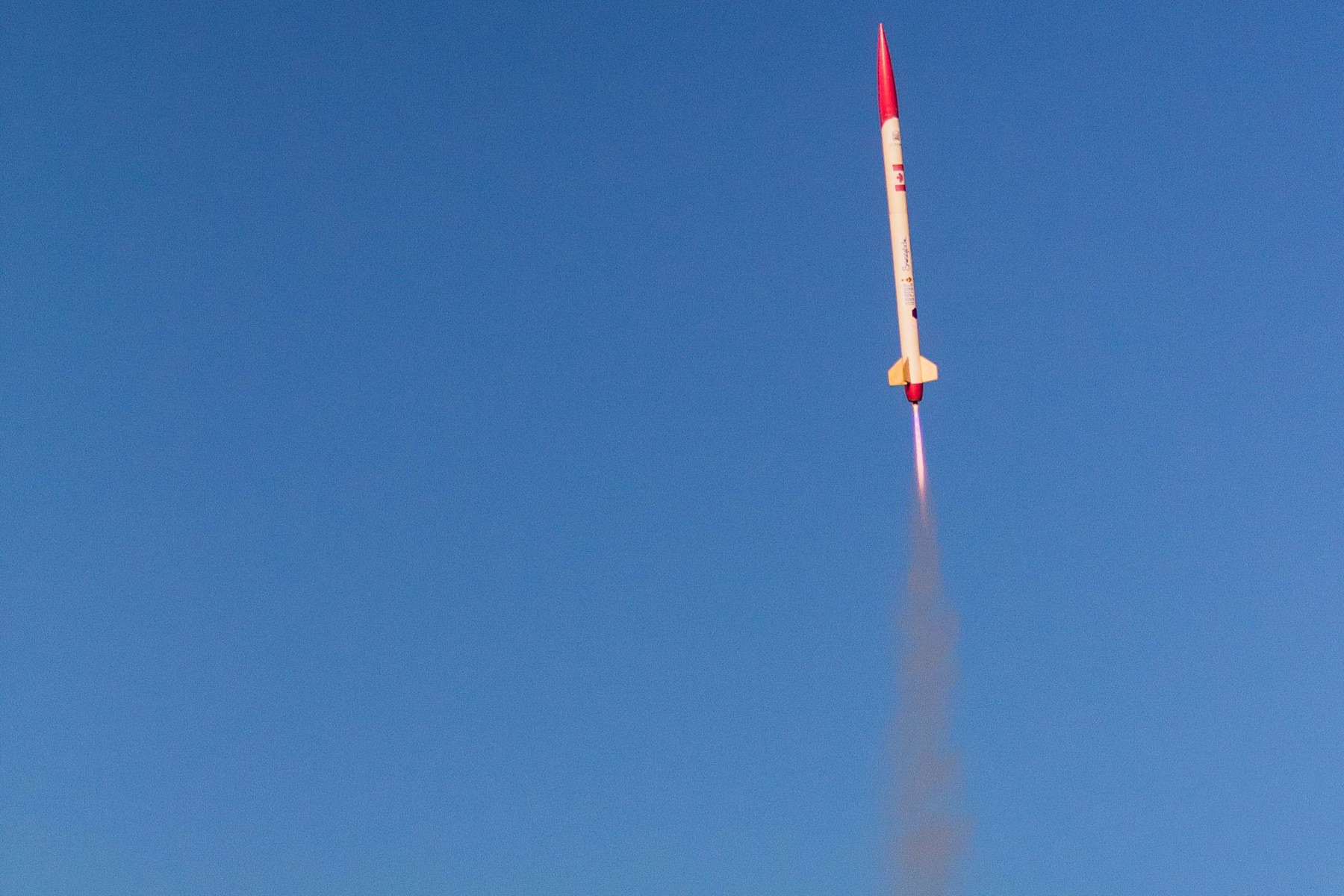
In November 2025, October Skies was finally completed and fully calibrated for launch. While it experienced a nominal flight, the extreme weather unfortunately led to no data points collected. In order to focus our resources on the upcoming liquid engine rocket project, our avionics sub-team, consisting of many new recruits, has decided to start anew by developing a brand-new avionics architecture, NGAP.
2025 system architecture

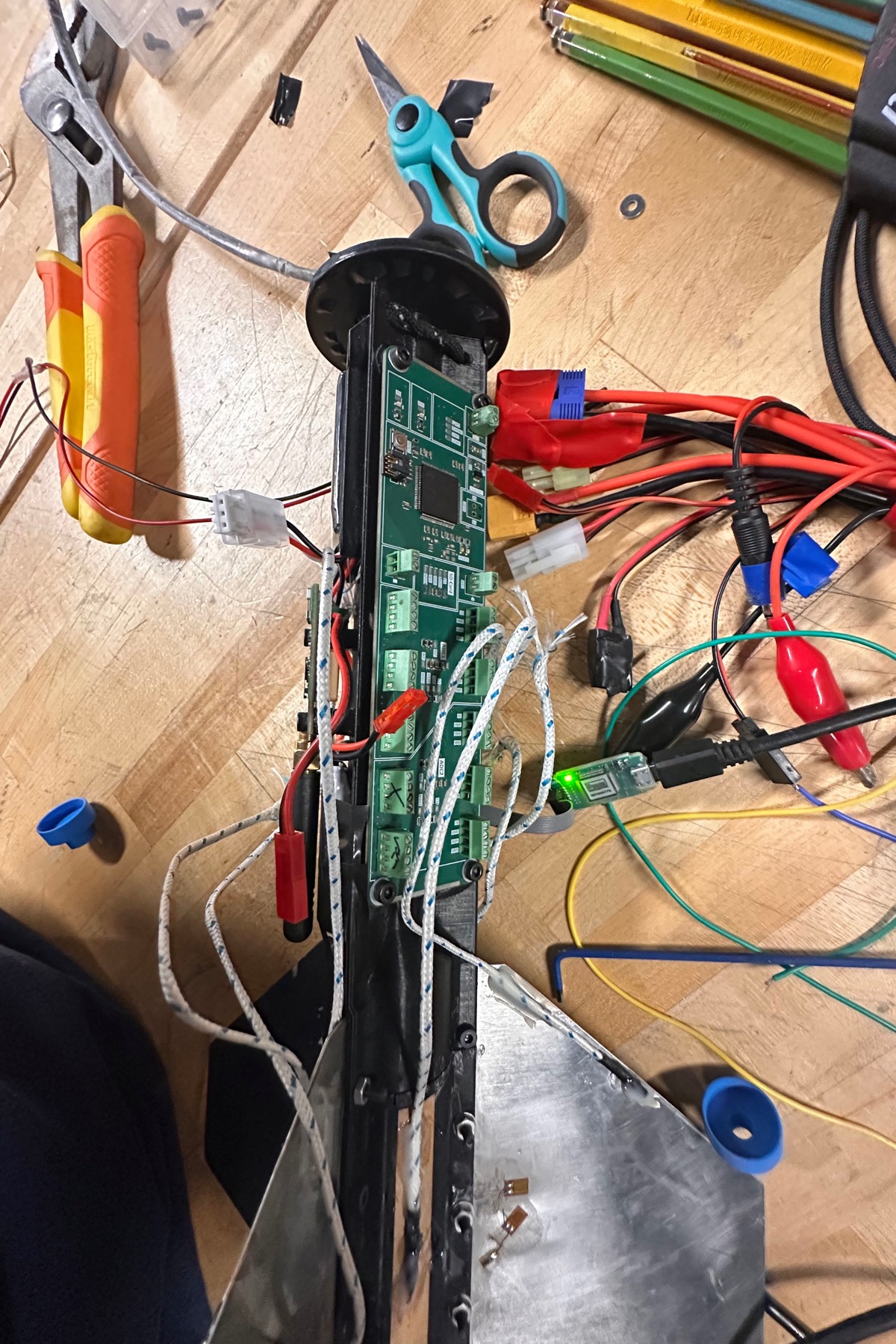
- ARGUS sensor suite
-
- SRAD drop-in standalone board
- 4-layer stack
- Records data locally with an option to stream to the ground station
- ARGUS pressure hardware
-
- Measures static and dynamic pressure
- Surface-mount silicone pressure sensors
- Cartridge heater and NTC thermistor maintain a 25 in manifold
- ARGUS temperature and strain hardware
-
- Temperature board probes thermocouples
- Strain board measures airframe deformation with strain gauges
- ARGUS software
-
- Rust programming language
- RTIC framework for concurrent tasks
- Finite-state machine for core flight logic
- Nose cone
-
- SRAD fiberglass hand layup
- 3:1 Von Kármán profile
- 3D-printed external tip with pitot tube
- Sampling ports for pressure measurements
- Body tube
-
- COTS cardboard tubes
- Sensor mounts
-
- 3D-printed PETG HF with low infill
- Upper mount under the nose cone houses the pressure board
- Static-pressure port ring houses two channels
- Lower mount above the tail cone houses strain, temperature, and motor/ejection-charge equipment
- Fins
-
- Three trapezoidal steel-sheet fins
- Through-the-wall attachment to the lower mount
- Strain gauges and thermocouples measure bending and temperature across the airfoil
- Tail cone
-
- 3D-printed PETG HF with low infill
- Von Kármán outline
- Launch lugs
-
- Aerodynamic bearing bronze
- Recovery
-
- Single deployment with a delay motor charge
- Hemispherical parachute with grommets
2025 designed system characteristics

- Propulsion
-
- COTS Aerotech G80-7T Blue Thunder solid motor
- Target apogee
-
- 366 m (1,200 ft)
- Predicted apogee
-
- 379 m (1,243 ft)
- Maximum velocity
-
- 88 m/s (Mach 0.26)
- Maximum acceleration
-
- 74.2 m/s²
- Dimensions
-
- Height 1.2 m
- Diameter 67 mm (2.6 in)
- Center of gravity
-
- Full 1,101 mm from the nose tip
- Empty 556 mm from the nose tip
- Center of pressure
-
- Minimum 837 mm from the nose tip
- Maximum 930 mm from the nose tip
- Mass
-
- Dry 1.14 kg
- Wet 1.21 kg
- Stability margin
-
- Minimum 3.8 cal
- Maximum 5.2 cal
- Launch configuration
-
- 2 m rail
- Rail departure velocity 12.3 m/s
- Nominal rail angle 84°
- Maximum wind velocity 30 km/h
- Motor performance
-
- Average thrust 77.6 N
- Peak thrust 108.5 N
- Initial thrust 99.2 N
- Total impulse 136.6 Ns
- Burn time 1.7 s
- Specific impulse 222.8 s
- Fin geometry
-
- Three fins
- Root chord 120 mm
- Span 90 mm
- Tip chord 50 mm
- Sweep distance 70 mm
- Average thickness 0.67 mm at the centerline
- Recovery
-
- Main descent speed 6.68 m/s at 7 s after launch
- Main peak deployment force 395.85 N
Project gallery